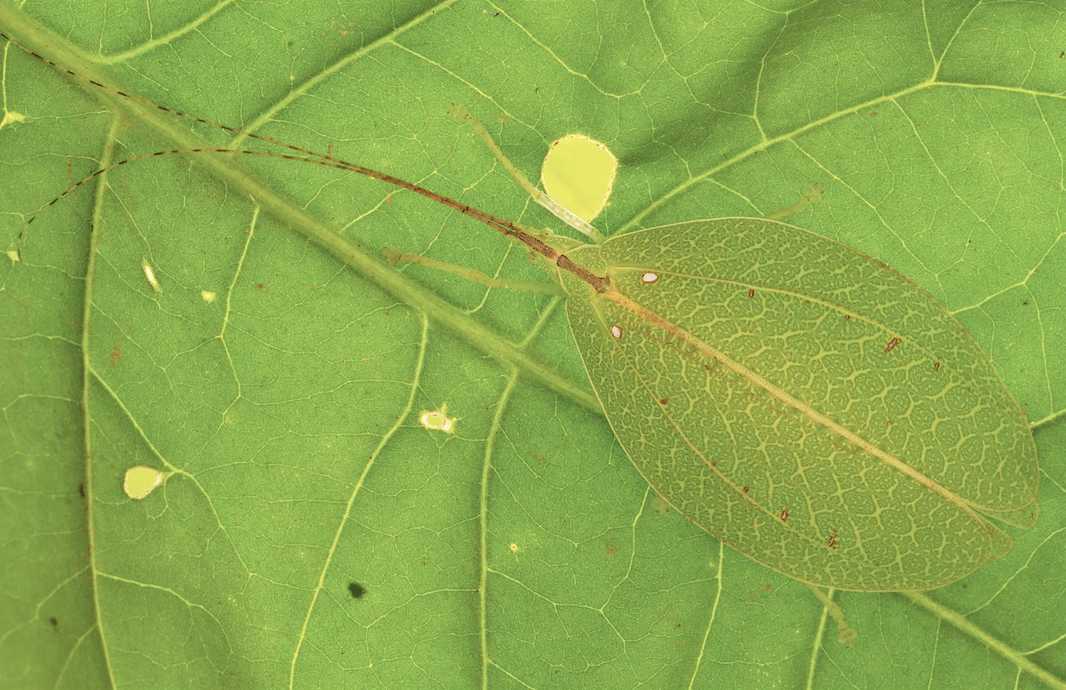
katydid’s dorsal surface features intricate venation patterns resembling leaf veins, while its edges mimic the serrated or smooth margins of leaves. Even its coloration shifts subtly, from vibrant greens to muted browns, allowing it to match different plant species. This flattened morphology isn’t just for show: when threatened, Acauloplax exigua presses itself against branches or leaves, eliminating shadows that might betray its presence. The effect is so convincing that predators like birds or lizards often pass it by, mistaking the insect for a mere part of the plant.
Endemic to Mozambique’s lush forests, this katydid thrives among broad-leaved trees, where its leaf-like form provides both protection and hunting advantage. As a nocturnal feeder, it emerges at night to consume plant matter, relying on its daytime camouflage to survive. For researchers studying evolutionary adaptation, Acauloplax exigua is a prime example of Batesian mimicry, where survival depends on nature’s most precise artistry. In the Mozambican wilderness, this leaf-like katydid proves that sometimes, the best defense is to become invisible—and in doing so, it becomes a masterpiece of natural design.